

DIY Metal Pipe Fencing vs. Hiring a Professional: What Texas Landowners Should Know

A metal pipe fence looks simple when you see the finished product: posts, rails, welds, gates, and a straight fence line.
Building one is a different story.
For Texas landowners considering a new pipe fence, doing the work yourself can save money on labor. And for someone with welding experience, the right equipment, plenty of time, and manageable ground conditions, DIY can make sense.
But the real comparison isn't simply DIY vs. paying a fence contractor.
It's whether the money you save is worth the time, equipment, physical work, and risk of having to correct problems later.
Here’s what to consider before you decide.
When Does DIY Pipe Fencing Make Sense?
We're not going to tell you every fence needs to be professionally installed. It doesn't.
A DIY pipe fence may be a reasonable option when you're building a short section, already own the necessary equipment, know how to weld, and aren't dealing with particularly difficult terrain.
It can also make sense when appearance and long-term durability aren't major concerns—for example, a small utility enclosure or temporary-use area.
But as the fence gets longer, the gates get heavier, or the ground gets harder, the project changes quickly.
A few hundred feet of pipe fence across Texas acreage isn't the same project as putting up a short fence beside the barn.
The Costs of DIY Go Beyond Steel
One of the biggest reasons to build your own fence is obvious: you aren't paying someone else for the labor.
But labor isn't the only cost.
Depending on the project, you may need steel pipe, concrete, welding equipment and consumables, cutting equipment, post-setting equipment, levels and layout tools, transportation, safety equipment, and machinery capable of dealing with difficult soil.
Then there's your time.
Setting posts, maintaining the line, cutting pipe, fitting rails, welding connections, hanging gates, and correcting mistakes can turn a weekend project into something considerably larger.
Before choosing DIY based on the material price alone, calculate what it will actually take to finish the fence.
Post Depth Matters More Than Most People Think
The fence you see above ground depends on what was done below it.
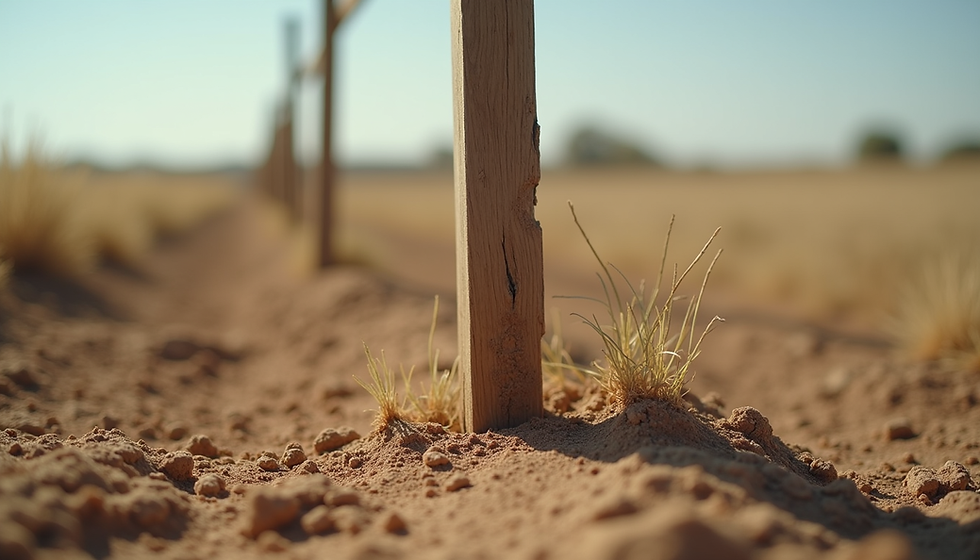
Ironstead sets posts 3 feet deep as our standard. When rock or boulders make that difficult, we don't simply move the post or leave it shallow—we'll jackhammer when necessary to maintain the fence design.
Why put that much effort into something you'll eventually cover with dirt?
Because the posts are the foundation of the fence.
A beautifully welded pipe fence isn't much of an investment if its foundation wasn't built for the job.
For a DIY installation, this is one area where you shouldn't improvise. Ground conditions, post dimensions, fence design, gate loads, and other factors can affect what an appropriate foundation looks like.
Straight Fence Lines Take Planning
Pipe fencing is unforgiving when it comes to layout.
A small error at the beginning of a long run can become much more noticeable farther down the fence.
Professional-looking pipe fence requires careful attention to post spacing, elevation changes, rail placement, gate openings, corners, and the visual line of the finished fence.
That matters even more around entrances and road frontage.
The fence isn't only containing livestock or defining a property line. In many cases, it's one of the first things people see when they approach your land.
At Ironstead, straight and level lines aren't an upgrade. They're part of the standard.
Your Steel Matters, Too
Not all pipe is equal.
Ironstead uses new steel rather than salvage pipe.
Used pipe can look attractive when you're comparing material prices, but its previous life and condition may introduce variables you need to consider before putting significant labor into the installation.
Saving money on the pipe doesn't automatically mean you're saving money on the finished fence.
For a fence expected to protect livestock, define valuable acreage, or become a permanent part of the property, we'd rather know exactly what we're putting into the ground.
Then There Are the Welds and Gates
A pipe fence puts a lot of importance on fabrication.
Rails need to fit properly. Welds need to hold. Corners need to work together. And gates introduce loads and movement that ordinary fence sections don't experience.
A gate that looks perfect on installation day isn't much consolation if it starts dragging later.
That's why gate posts, hinges, clearances, alignment, and the surrounding fence structure need to be considered together.
If you're an experienced welder and fabricator, this may be familiar territory.
If you're learning while building the fence, recognize that mistakes here can be considerably harder to correct after everything has been installed.
DIY vs. Ironstead: What Are You Actually Paying For?
When you hire Ironstead, you're not simply paying someone to put pipe in the ground.
You're paying to hand off the layout, excavation, fabrication, welding, alignment, difficult ground conditions, equipment requirements, and installation work to a crew that builds pipe fencing for Texas properties.
Our standard is specific:
New steel. Posts set 3 feet deep. No skipped posts because the ground got difficult. Straight lines. Solid construction. Clear bids.
Those details matter because a permanent fence should be judged years after installation—not just the afternoon the crew leaves.
Which Option Is Right for Your Property?
DIY may be right for you if you have the equipment, fabrication skills, time, and willingness to handle the project from layout through final weld.
Professional installation starts making more sense when you're dealing with substantial acreage, long fence runs, prominent entrances, livestock containment, multiple gates, difficult terrain, or a fence you expect to remain part of the property for years.
The cheapest way to get pipe around a property and the best long-term value aren't necessarily the same thing.
Before deciding, compare the entire project: materials, equipment, labor, your time, and the standard of finished fence you want.
Want to Know What Professional Installation Would Cost?
You don't have to decide between DIY and professional installation without knowing both sides of the equation.
If you're planning a pipe fence on your Texas ranch or acreage, contact Ironstead for a clear bid.
You'll know what the project will cost, how we intend to build it, and what you're getting for your investment.
Then you can make the decision that makes the most sense for your land.
Ironstead Fencing — The Ranch Fence Authority.

Comments